
Moving Into a Spiritual Community at 55: What I Thought I Was Doing—and What Actually Happened
When I went to live at the Clear Sky Meditation Center at age 55, I thought I knew exactly what I was stepping into. In many ways, I felt I had “done the life” already: raised my kids, built a career, lived the arc of family and marriage. When my marriage ended abruptly, I found myself standing at a crossroads. Having been connected with Clear Sky, the teachers and the community for a couple of years, I thought now was the time to do something I had only dreamed about — diving into the spiritual life more fully. I wouldn’t have this chance again.
So I made the leap. I told myself I’d give it a year. A year to meditate, a year to reset, a year to finally dive into the teachings that had been calling me for so long. But like most meaningful transformations, what I imagined and what actually unfolded were two very different things.
The Hidden Motivations You Only Notice Later
Looking back, I entered the Clear Sky community with both sincere aspiration and a quiet, unexamined hope to replace what I had just lost. Part of me wanted to let go of my old life; another part wanted to recreate it in a spiritual setting. That contradiction didn’t work for long. You can’t serve two masters—not in the inner world, and certainly not in a Vajrayana spiritual community like Clear Sky.
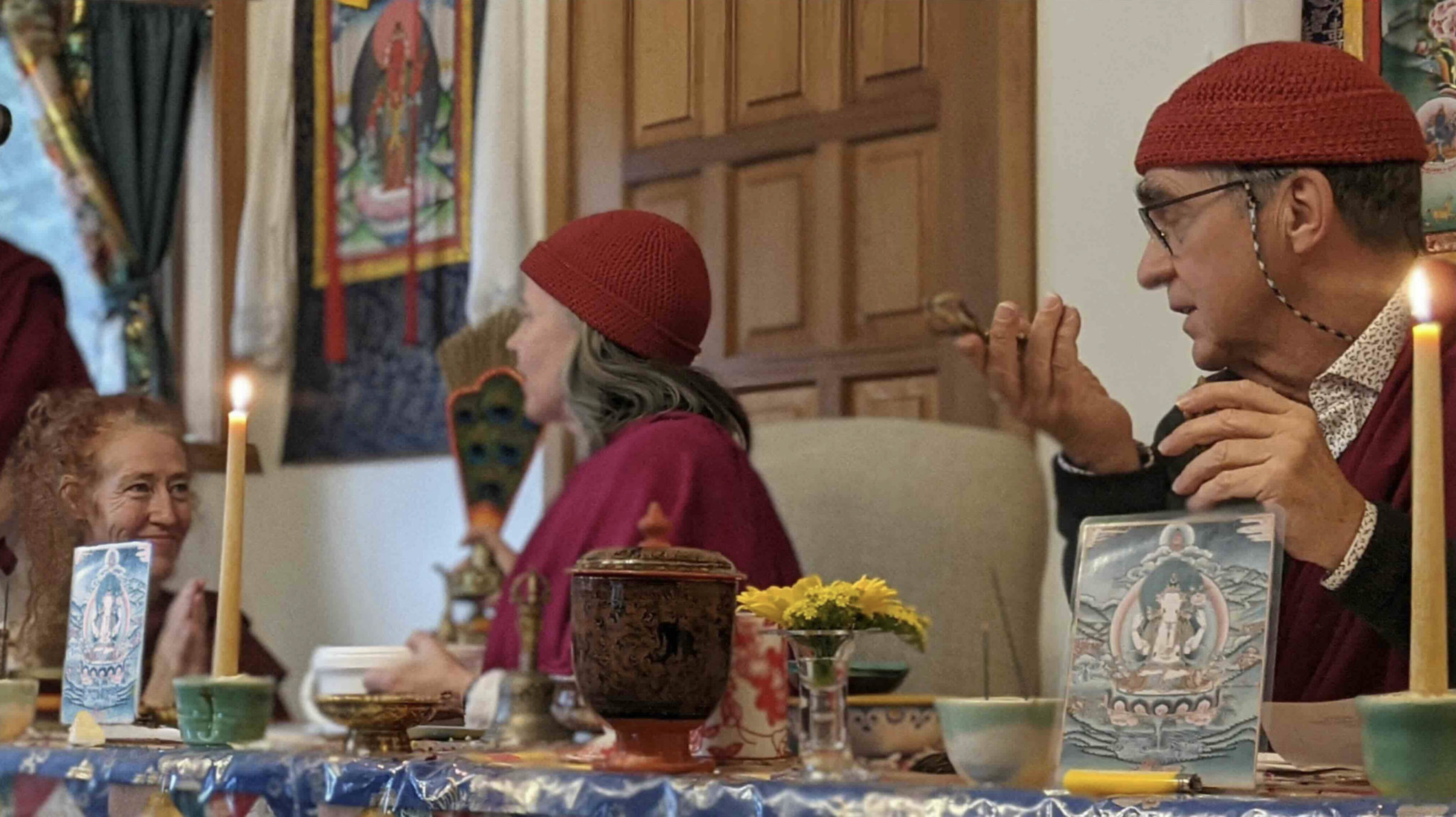
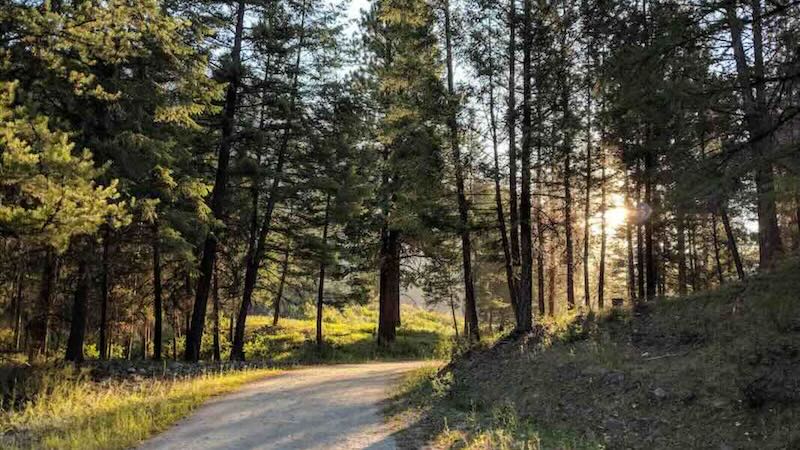
The teachers, Qapel and Sensei, had been saying for as long as I had known them to drop the personal story, drop “Dean’s life.” Still, I arrived with expectations about who I would be here and how things would go. I imagined long hours sitting in the shrine room, peaceful walks on the property, a simple contemplative rhythm, with spare time to pursue my other hobbies and interests.
Instead, within two weeks, my teacher Qapel reminded me, unapologetically, “Karma Yoga is 15 hours a day.” I had been under the mistaken assumption that it was 3.
https://www.planetdharma.com/what-is-karma-yoga/
The contract, it seemed, had changed.
Spiritual Community Is Not an Escape from People—It’s an Immersion in Them
Like many who arrive later in life, I thought I had already navigated the messiness of relationships—family, marriage, career dynamics. I was ready to be done with all of that. I imagined people in a spiritual community would be calmer, more grounded, more mature.
What I discovered was a whole new level of “living with everyone’s stuff”—including my own.
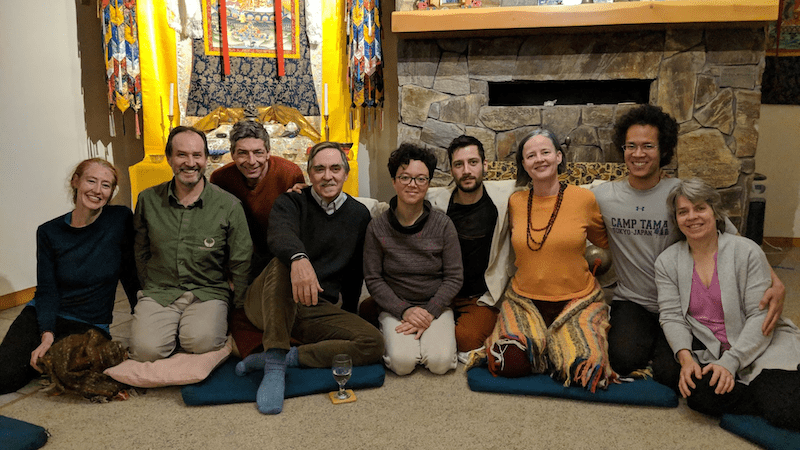
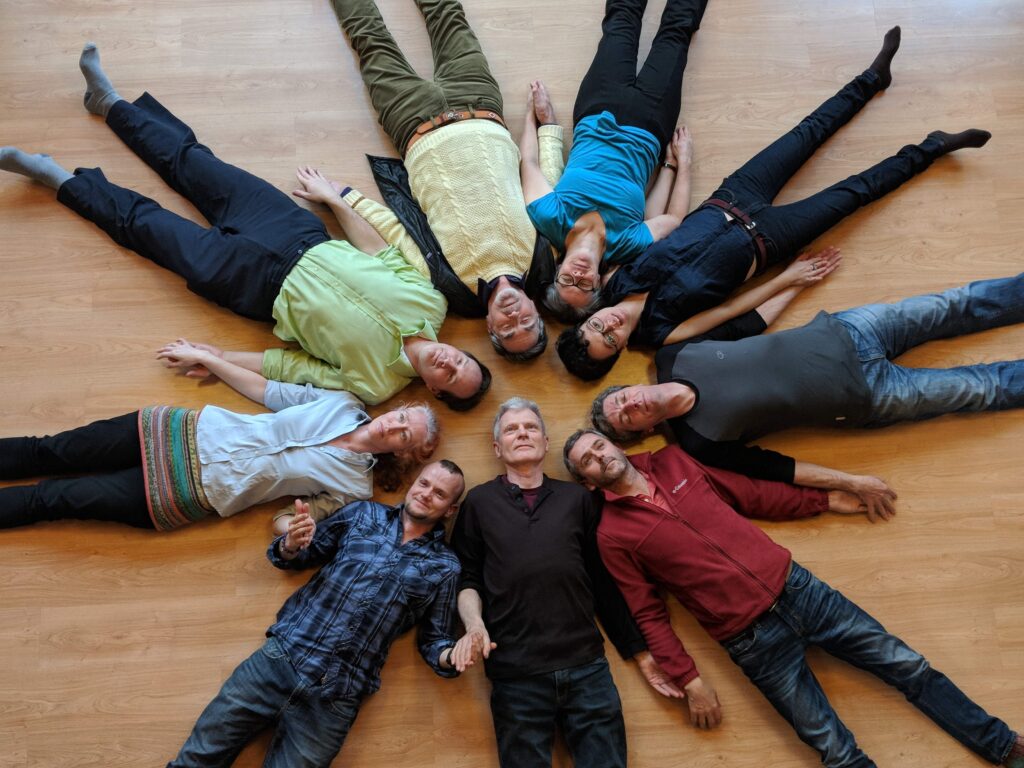
I had left a marriage that had become painful, only to find myself in a new kind of family: one filled with people of all ages, all at different stages in their practice, all with their own neurotic patterns and triggers. There were interpersonal frictions, moments of deep connection, and moments when we all drove each other a little crazy. It wasn’t the escape I had hoped for. In many ways, it was messier than the life I’d left.
No Way Back
Part of the difficulty in those first couple years was the feeling of having “nowhere to go back to.” On my days off I would drive the 40 kilometers into town, half-heartedly trying to reconnect with people I had known before. But those relationships had shifted—or dissolved—after my divorce. And the deeper my spiritual practice became, the less I could genuinely meet people where we used to meet. We weren’t sharing the same reference points anymore.
I wasn’t the man who bird-watched, talked politics or chatted about the latest series on Netflix. But I wasn’t yet the person I was becoming either. It was an awkward, lonely in-between time—a bumpy couple of years of recognizing that life as I knew it had ended, while life here hadn’t fully taken shape.
When I realized that leaving would only send me back into the same patterning I’d been living for decades, something shifted. The illusions fell away. There was nothing “out there” to return to—not in the sense of a meaningful next step. The only way was through.
Letting Go of Who I Thought I Was
Another big lesson joining the community in mid-life was recognizing that the confidence I had gained in my personal and professional life was both a blessing and a trap. I had assumed that my background—psychology training, years of personal work, general life maturity—translated into spiritual maturity.
It didn’t.
As my practice deepened, I saw that clearly. I saw where I was naïve, where I was self-deluding, and where my ego had taken up residence in my spiritual identity. The humbling awareness was uncomfortable. My teachers told me that their job was to tear down everything I thought I was, so that a new being could arise. Once I accepted that I wasn’t where I thought I was, I could start to see where I actually was. And that’s when genuine growth began.

An Unexpected Teacher: Karma Yoga
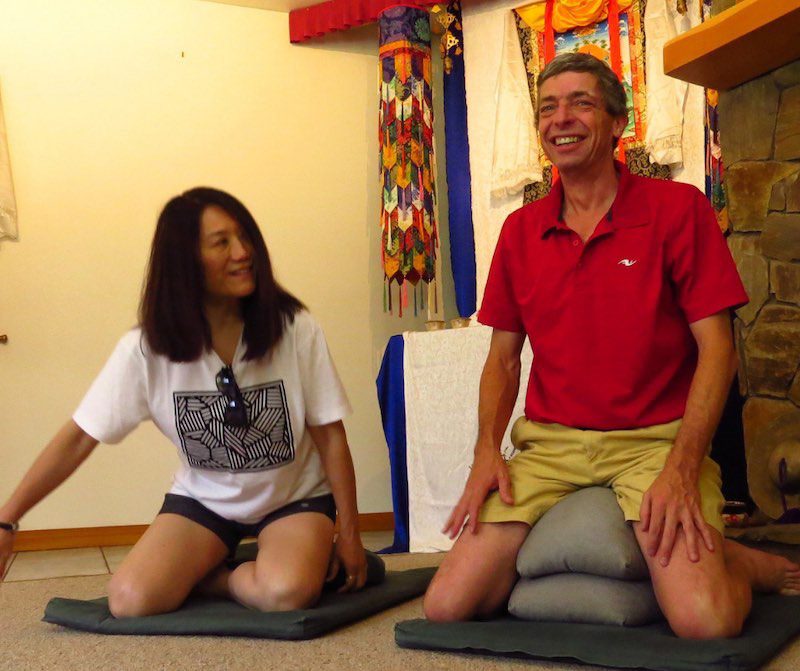
I didn’t come here imagining that hauling firewood, scrubbing floors, and problem-solving with difficult personalities would be my spiritual path. But karma yoga became one of my greatest teachers. It was easy to feel hard done by, that the work never ended, and that there was never time for what ‘I’ wanted to do. Eventually, though, I realized the beauty of karma yoga and how it was a transformative spiritual practice. Since I’m always doing something during the hours I’m awake anyway, why not drop the ego preference of what ‘I’ want to do, and learn to enjoy and be fully engaged in whatever I’m doing?
If You’re Considering Entering a Spiritual Community Later in Life
First, explore your aspiration deeply. Really look at what’s motivating you. Idealism is natural, but it won’t sustain you.
Second, recognize that the conditioning built over decades doesn’t dissolve gently. Initially it’s like hammering out the dents in an old car. Only later does it become a polishing.
And finally: don’t expect an escape. Expect immersion. Expect a mirror. Expect to meet yourself in ways you’ve avoided for years.
It won’t be easy. But if the aspiration is real, it will be worth it. And once the path begins, as one teacher wrote, “don’t ever leave it.” Because eventually you’ll see—there’s nowhere else to go.