“The earth is our greatest classroom. Every time I learn something new about the universe, it becomes bigger and more amazing.”
-Catherine Pawasarat Sensei
Clear Sky is committed to promoting the teaching of awakening for current and future generations — with an eye to supporting beings for 400+ years into the future. We see it as our responsibility, and our privilege, to practice, live, work, and play in a way that fosters an increasingly vibrant environment for generations to come.
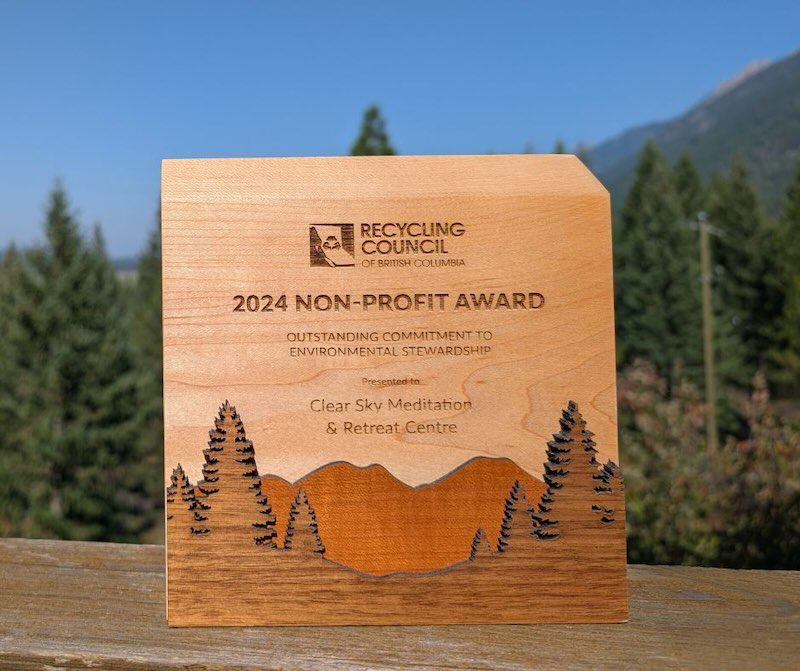
Under the visionary leadership of Catherine Sensei, and with support from wonderful regional partners, the Clear Sky community has implemented a number of generative environmental initiatives — and in 2024, the Recycling Council of BC recognized this work with their Non-Profit award for Outstanding Commitment to Environmental Stewardship.
Healing with the Land
Clear Sky sits within the Yellowstone to Yukon wildlife corridor, home to a rich biodiversity of migratory animals — and to one of Canada’s most threatened grassland ecosystems, depleted over decades by wildfire suppression and overgrazing.
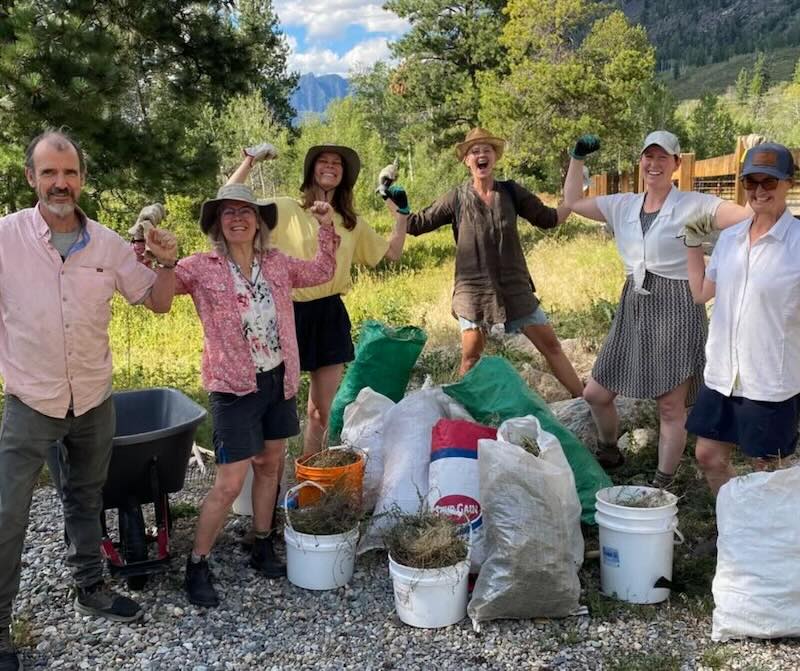
In the spirit of Buddha-Dharma’s fearless approach to awakening, we’ve turned this challenge into an opportunity for growth — both inner and outer. Helping the land return to vibrancy turns out to be healing for our own bodies too, deepening our sense of connection and selflessness… and we have a lot of fun doing it!
Working compassionately with invasives and “weeds,” using techniques like chop-and-drop to speed their soil-replenishing lifecycle rather than reaching for chemicals or extermination
Partnering with a local forester to thin our woodlots in ways that support soil, birds and other wildlife — after all, trees are technically “weeds” in a grassland ecosystem!
Creating a Grasslands Demonstration Plot with Columbia Basin Trust and hosting a Holistic Land Management course — bunch grasses, wood lilies, and other keystone species have since returned to the property
Removing fences and barbed wire and supporting wildlife migration by maintaining a no-hunting sanctuary in the heart of hunting territory
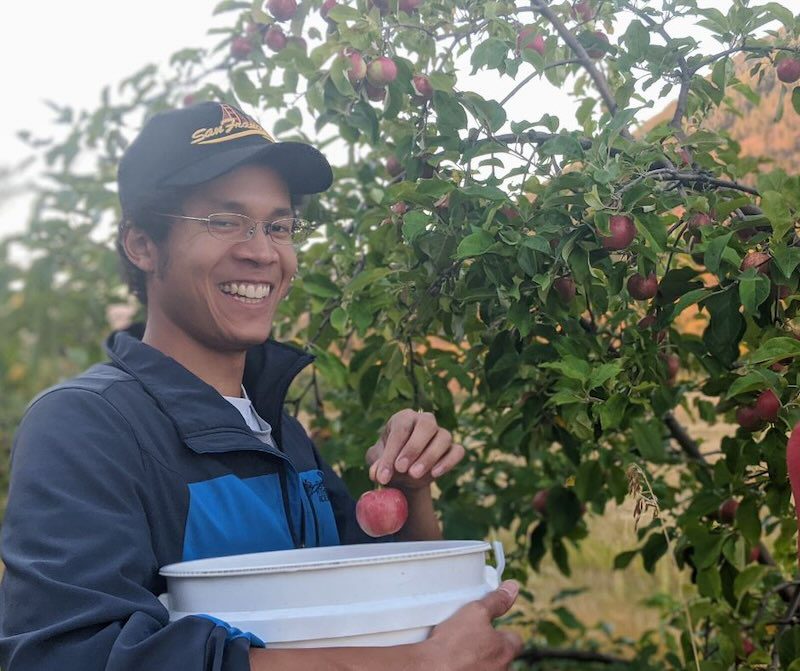
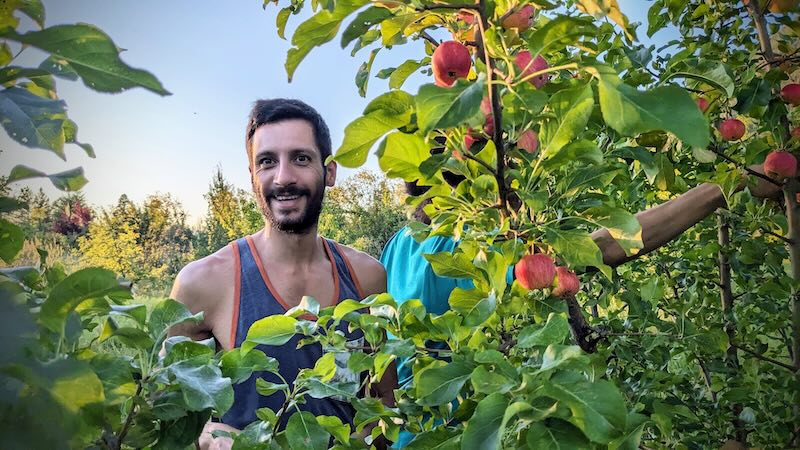
Cultivating a cold-climate Food Forest that produces native fruits, nuts, and herbs for our kitchen
This work doesn’t happen alone — it’s part of a wider regional effort alongside great regional partners. Learn more about these connections on our Social Bottom Line page
Green Building
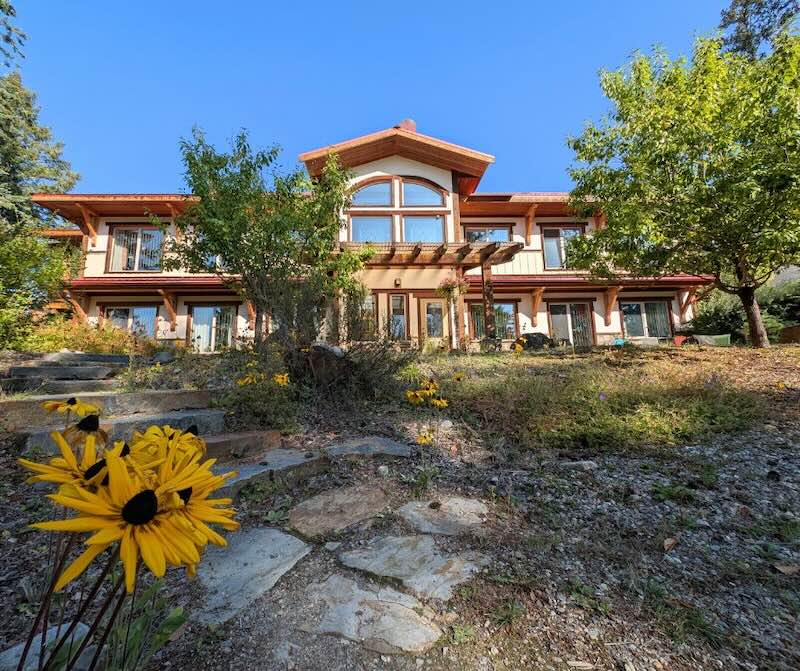
In 2013 we built our first residential building, Sky Roots, with the intention of making it as sustainable as possible — laying the foundation for how we’ve approached buildings ever since. With our sights set 400 years out, we look beyond standard green-building checklists to each building’s full carbon footprint, choosing materials that can be reused or recycled long after the building’s life is done — a tall order in an industry full of plastics and composites.
Sky Roots: heated and cooled by an annualized geo-solar system, framed with lumber milled from trees cleared on-site, and wrapped in a high-performance envelope with 12-inch walls and triple-pane windows
Sanctuary: upgraded in 2024 from an old fuel-oil boiler to a high-efficiency heat pump
Oasis: built in 2020 to meet manufactured-home code, but with natural plywood instead of composite, wool carpets and FSC flooring instead of vinyl, recyclable metal roofing, and an HRV system for efficiency
Orion cabin: built in 2022 by a community member from strawbale and local timber, finished entirely with sustainable wood and natural clay/cobb walls
Tack room: built in 2026 from sustainably milled local wood and recycled cellulose insulation, entirely plastic-free, and far exceeding typical farm-building efficiency standards
Looking ahead: our future temple complex is being designed with a high-efficiency geo-exchange system, recyclable materials, and FSC-certified wood — currently exploring sustainable drywall and insulation alternatives too
Full Circle Living
Living in community opens up a wealth of opportunities for joyful sustainability — nearly everything is more efficient at a scale of 10 or 20 people than 1 or 2. Shared resources also mean residents can take the lead on projects they’re passionate about, all guided by one shared principle: curiosity. We’re constantly asking what will have a truly positive impact, for the next 400 years and beyond.
For over 20 years we’ve run a local, organic-focused kitchen, partnering with dozens of regional farmers and food producers — and finding creative ways to use the cold-climate fruits and herbs our own land produces
Communal meals are a quietly generative practice: vibrant food, minimal waste (all composted), and the affordability that comes with buying in bulk
Multiple compost systems keep our gardens thriving — hot compost for kitchen scraps, bokashi for meat and bones (often landfilled or burned elsewhere!), and a hot manure compost system
Over 20 recycling streams help us divert as much as possible from landfill — upcycling, choosing minimal/recyclable packaging, and sending worn textiles to Vancouver for recycling
We make many of our own natural cleaners and source others from local family businesses using organic ingredients — part of a broader effort to use natural fabrics, renewable paper, and eliminate microplastics from our land and water
Car-sharing is increasingly common in our rural setting, and we’re shifting our community fleet toward EVs
Getting Embodied Together
None of this happens in isolation — it’s “Easier with Others,” one of our core community principles. Every initiative on this page started with one person’s curiosity and grew because a whole community showed up to share the work, the learning, and the fun. If this kind of life — body, speech, and mind in service of something larger — speaks to you, we’d love to have you visit, volunteer, or simply get in touch.